
10 Signs AI Hype Is Outpacing ROI for Small Businesses
How to Spot When AI Tools Cost More Than They’re Worth


Image by Gerd Altmann from Pixabay
AI is not failing small businesses.
The way it is being sold to them is.
Tools are reaching the market faster than owners can test them, understand them, or recover value from them. That gap is where frustration grows, and ROI quietly disappears.
If you are paying for AI tools you barely use, supervising automation that promised leverage, or feeling uneasy about outputs you cannot explain, you are not behind. You are noticing something real.
This is not an anti-AI argument.
It is a clarity check.
Here are ten signs the AI hype is outpacing real return for small businesses.
1. You Pay Monthly for Tools You Barely Touch
If a tool only saves time in theory, it costs money in practice.
Subscription stacking happens quietly.
An AI writer.
A scheduling assistant.
A CRM with automation baked in.
Month one, you log in twice.
Month two, once.
Month three, you forget it exists until the charge hits.
The real cost is not the subscription.
It is the mental load.
Learning new dashboards.
Switching contexts.
Remembering which tool does what.
Usage frequency is ROI, not feature count.
A consultant subscribes to an AI content generator. She uses it twice a month to draft emails. The tool costs $50 monthly. That is $25 per use. A freelancer would be cheaper.
If you use a tool fewer than ten times a month, you are paying for potential, not performance.
“Usage frequency is ROI, not feature count.”
2. The Tool Promises Leverage But Adds Process
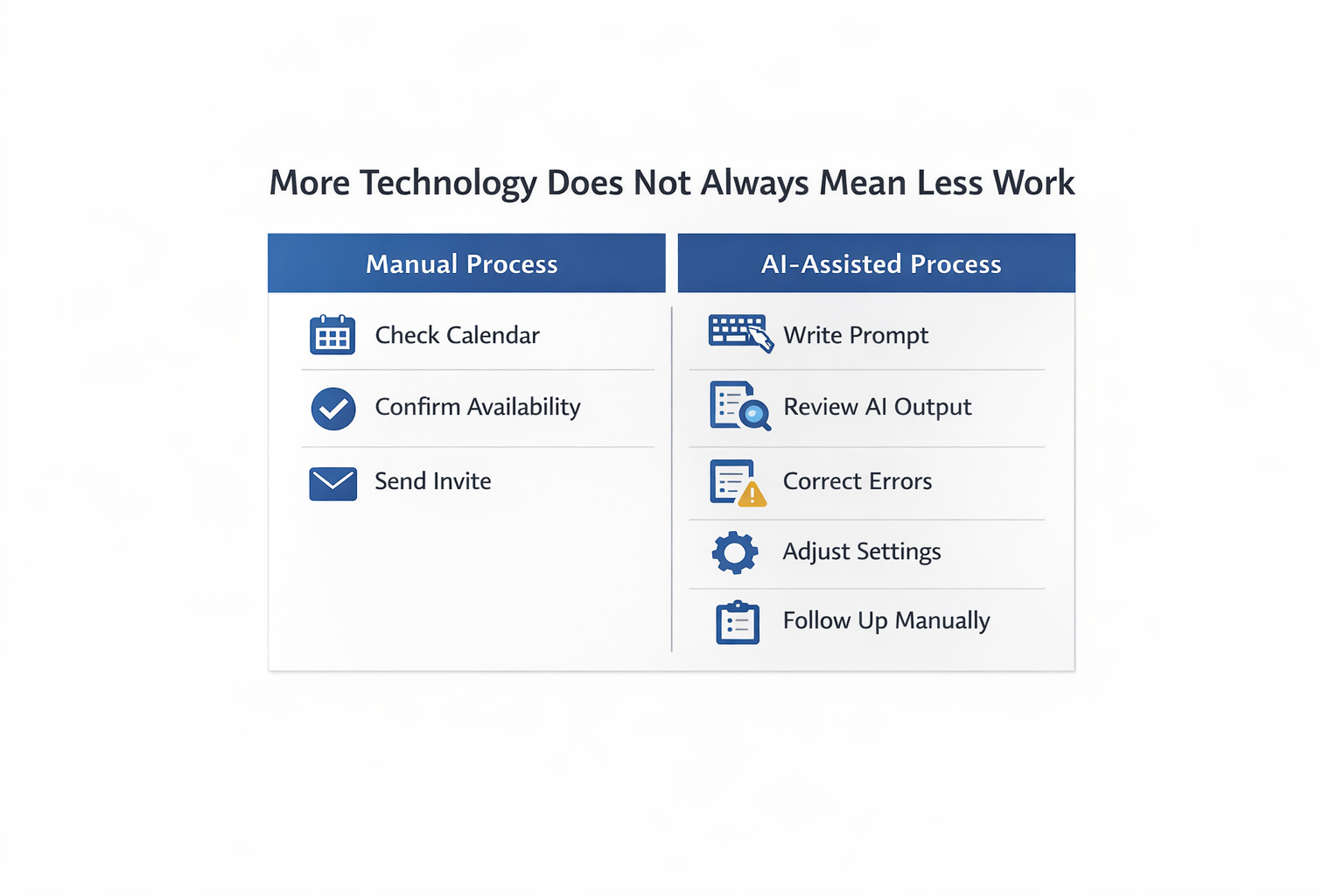
AI that needs constant supervision is not leveraged.
It is labor.
The pitch says autopilot.
Reality says oversight.
You write prompts.
You review outputs.
You correct errors.
You adjust settings.
Autonomy gets oversold. What vendors call automation often means delegation without training. You become quality control for software.
A small business owner buys an AI scheduling tool. It is supposed to book calls automatically. Instead, she spends twenty minutes a day correcting time zones and chasing confirmations. Her manual calendar took ten.
Leverage reduces steps.
If a tool adds them, it is not saving time.
“AI that needs constant supervision is not leverage. It is labor.”
3. You Cannot Explain the Output to a Client
If you cannot explain the work, you cannot stand behind it.
A client asks how you arrived at a recommendation.
You pause.
The AI generated it.
You trust it.
But you do not understand it.
Black boxes create distance between you and your work.
Credibility depends on clarity. When insights feel algorithmic, authority erodes.
A financial advisor uses AI-generated investment reports. A client asks why a stock was recommended. The advisor does not know. The client switches advisors.
Explainability is a business requirement, not a technical one.
4. The Tool Replaces Thinking Instead of Supporting It
AI should sharpen judgment, not replace it.
Over-automation dulls instinct. Strategy turns generic. Outputs look polished but lack lived context.
AI recognizes patterns.
It does not know your client.
It does not know your market.
It does not know your risk tolerance.
A marketing consultant relies on AI-generated strategy decks. Clients push back. The ideas sound right, but feel empty. She realizes she stopped thinking through the work herself.
Good tools extend judgment.
Bad ones substitute for it.
“Good tools extend judgment. Bad ones replace it.”
5. The Learning Curve Never Plateaus
If mastery keeps moving, the product is unfinished.
You learn the interface.
An update rolls out.
Buttons move.
Features disappear.
You watch tutorials monthly because the tool never stabilizes.
Constant updates signal instability. You become a tester, not a user.
A freelance designer subscribes to an AI design assistant. Every update reshuffles the workspace. She spends more time searching than designing.
Stability matters more than novelty.
6. The Tool Works Best in Demos, Not Real Work
Demos show the possibility.
Businesses need reliability.
The demo is flawless.
Your data is messy.
Real files have typos.
Scans are crooked.
Edge cases are normal.
That gap is where ROI dies.
A bookkeeper buys an AI receipt scanner. The demo works perfectly. Her client files break it. Half the receipts fail. She goes back to manual entry.
Stress test tools with your messiest data before committing.
7. You Feel Pressure to Adopt, Not Desire
Urgency is a sales tactic, not a business signal.
You sign up because others did.
You worry about falling behind.
Fear-driven adoption rarely sticks because the tool was never tied to a real problem.
A consultant buys an AI research tool after peers recommend it. She does not have a research problem. She has a delivery problem. The tool collects dust.
Buy tools when you have a problem they solve, not when others tell you to.
8. ROI Is Framed as Potential, Not Proof
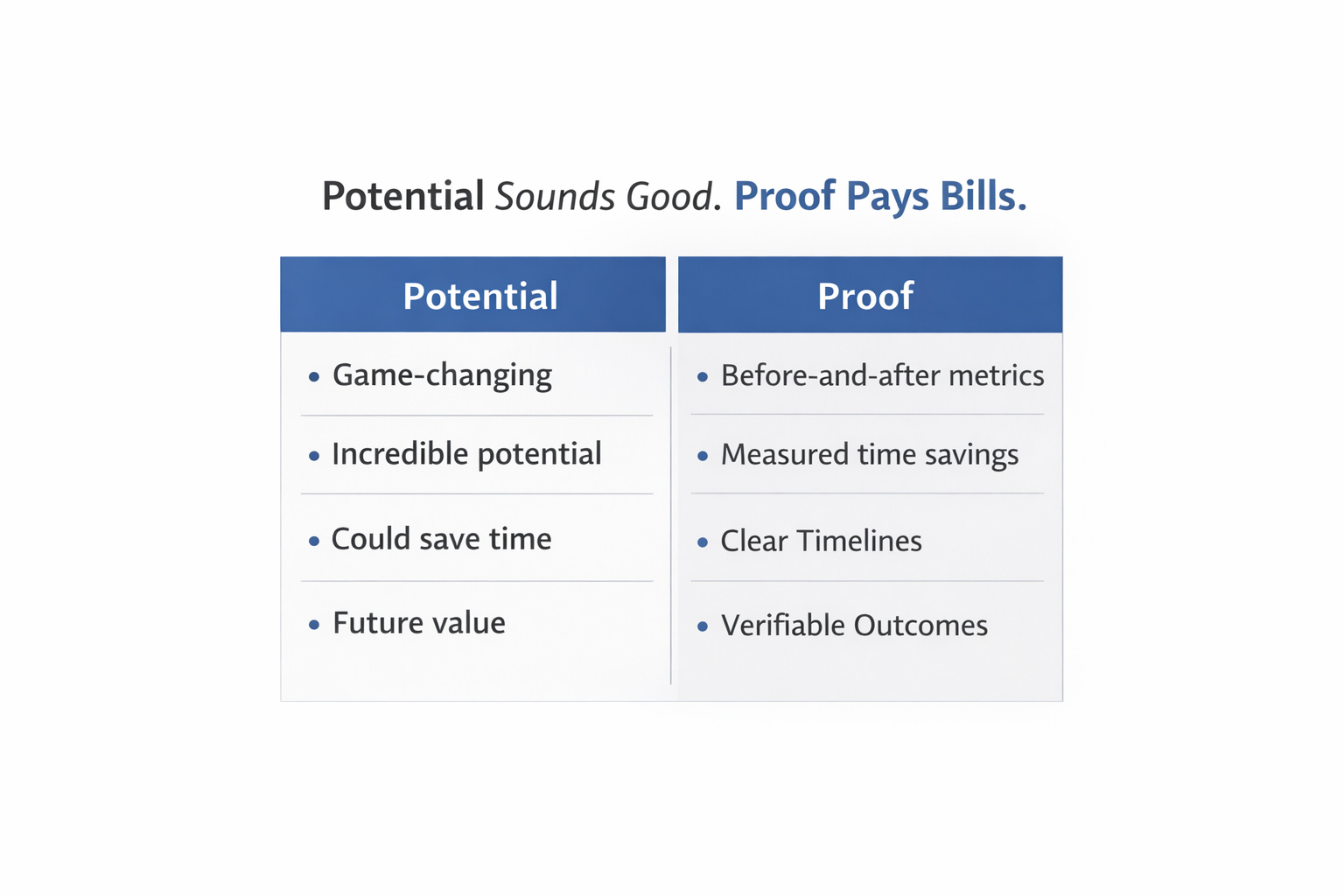
Future value does not pay current invoices.
Testimonials say “game-changing.”
Case studies avoid numbers.
Time savings are estimated, not measured.
Real ROI comes with timelines and before-and-after metrics.
A small agency reviews an AI analytics tool. No numbers. No proof. Just promise language. They walk away.
If the vendor avoids specifics, assume uncertainty.
“Potential does not pay invoices. Proof does.”
9. The Tool Requires You to Change Your Business Model
If a tool requires a new business model, it is not a tool.
Efficient software should fit your workflow.
Do not demand a rebuild.
A coach buys an AI course platform built for group programs. She runs one-on-one sessions. Using the tool would require a full pivot. She cancels.
Tools should serve the business, not reshape it.
10. You Feel Relief When You Consider Canceling
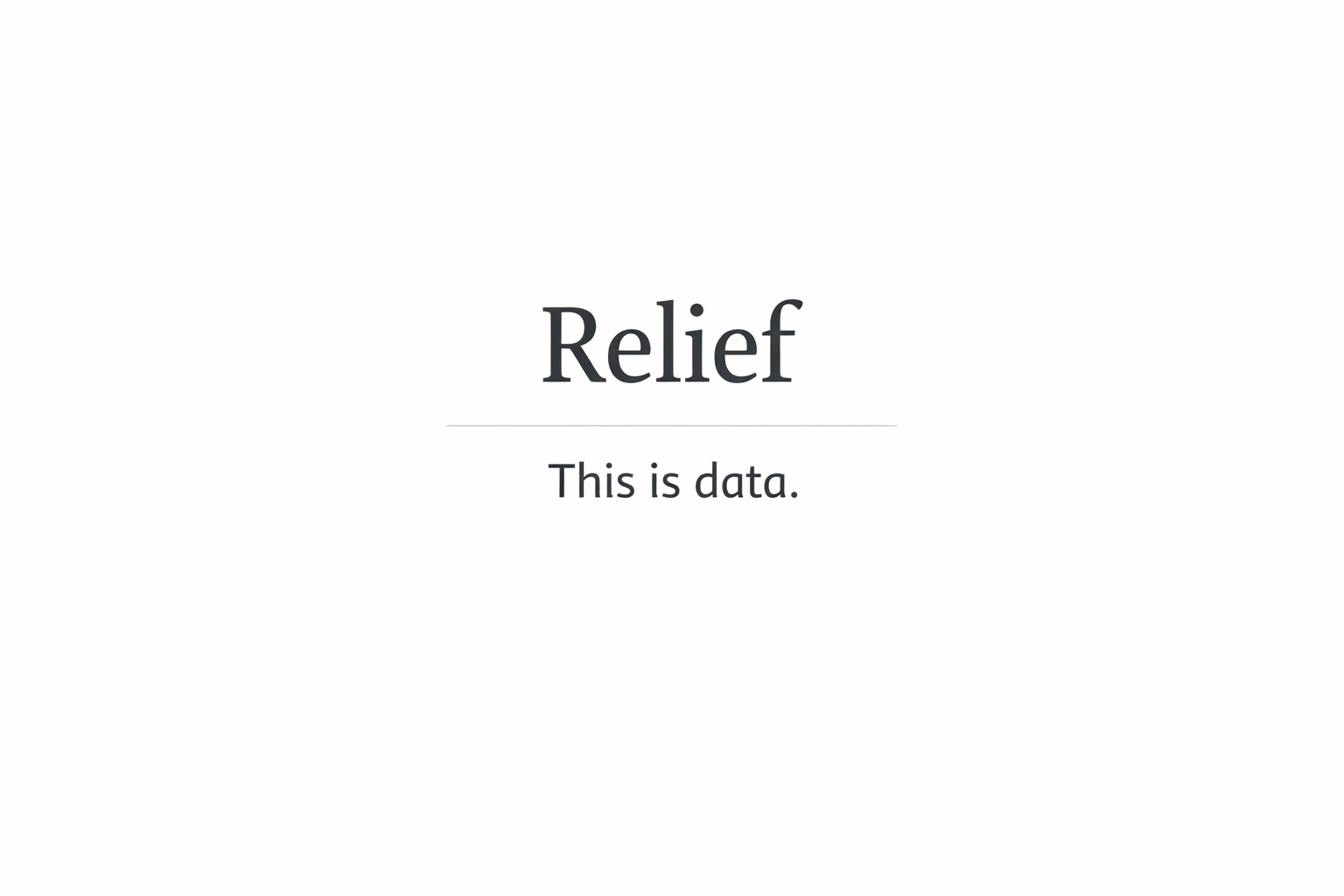
You imagine unsubscribing.
Your shoulders drop.
Less to manage.
Less to justify.
Less to remember.
A solopreneur cancels three AI tools in one week. Instead of regret, she feels lighter. Her workflow simplifies. Her focus returns.
If relief follows cancellation, the tool was not helping.
“Relief is data.”
What This Means for You
The real risk is not missing out on AI.
It is outsourcing judgment too early.
Skepticism is not resistance.
It is a restraint.
Selective adoption is maturity, not fear.
If this piece helped you name what felt off but hard to articulate, the deeper work is learning how to filter signal from noise before you spend again. That is the focus of Navigating the AI Bubble: A Small Business Survival Guide, which moves from diagnosis to practical decision-making.
AI has value.
But value requires alignment, clarity, and proof.
You do not need to adopt everything.
You need to adopt the right things.
Thanks for Reading
Buy Me A Coffee |Gumroad| Medium