
Gen X Didn’t Become Cynical. They Became Feral
What looks like skepticism is really a generation that learned, the hard way, that every system eventually fails.


Episode #105
Gen X Didn’t Become Cynical. They Became Feral
What looks like skepticism is really a generation that learned, the hard way, that every system eventually fails.
Gen X gets called cynical a lot.
Usually, by people who didn’t watch the same things fall apart.
Not the big, obvious collapses that make headlines. The quieter ones. The layoffs that came out of nowhere. The companies that looked stable until they weren’t. The promises that held right up until the moment they didn’t.
If you’ve ever kept something on the side just in case, you already know this. Generation X side hustles didn’t come from ambition. They came from pattern recognition.
That distinction matters.
Here’s what the 1980s actually felt like from the inside.
Your dad worked at the same company for eighteen years. Then, one Tuesday, he didn’t. No warning. No transition plan. A handshake and a box of desk items.
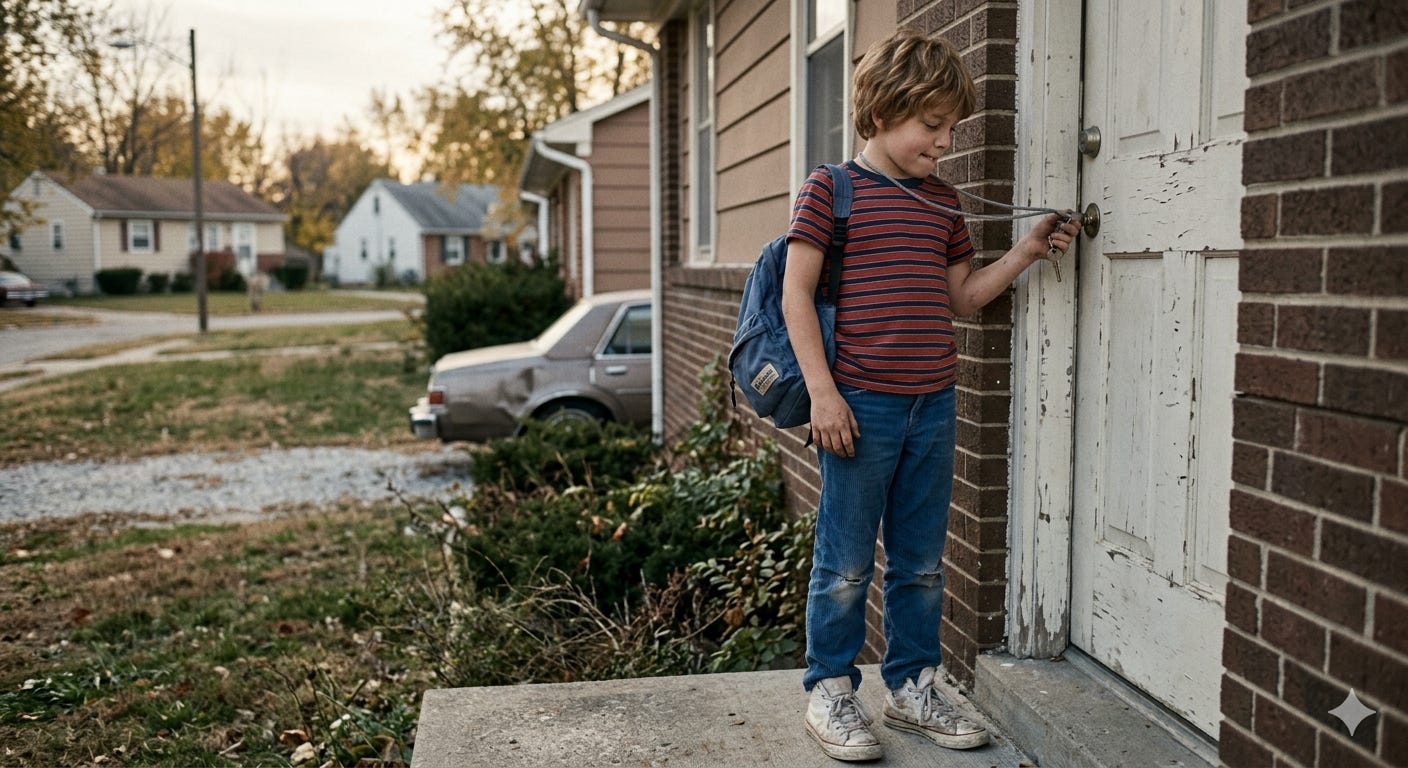
Your mom went back to work because they needed the money. You came home to an empty house. You figured out dinner. You figured out most things.
That wasn’t dysfunction. That was just Tuesday.
A generation of kids grew up managing their own time, making their own decisions, failing at small things, and fixing the failures without adult supervision or a system to consult. The latchkey around your neck wasn’t a symbol of neglect. It was the first credential nobody asked for.
Then came the institutions.
Vietnam had already happened. Watergate had already happened. By the time Gen X was old enough to pay attention, the lesson was already embedded: the people in authority were not always acting in good faith. That wasn’t radicalism. It was arithmetic. You could read the documents. You could see the photographs. The gap between what was being said and what was visibly true was not a matter of interpretation.
Institutional trust didn’t collapse. It recalibrated.
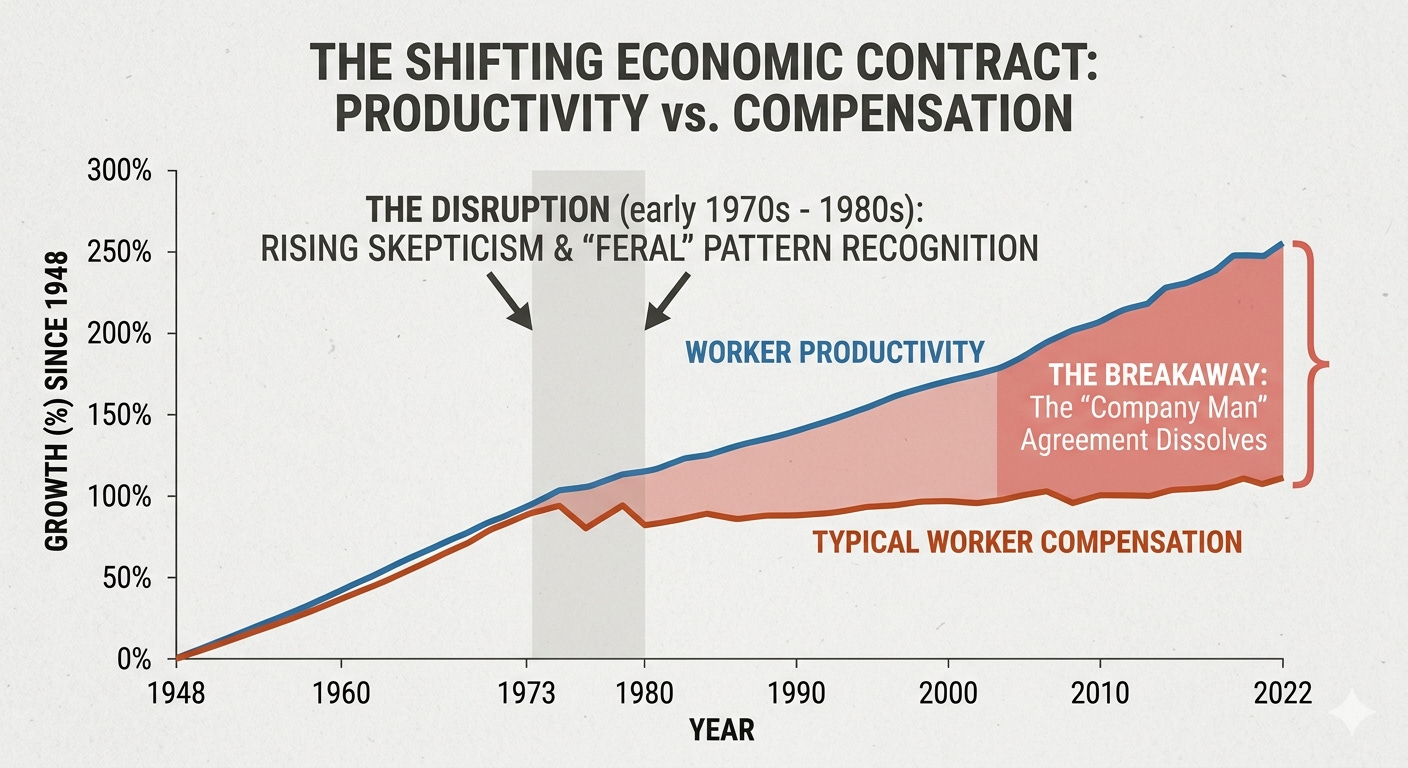
The generation before Gen X had built careers and identities around institutional loyalty. You were a company man, or you weren’t. The institution defined legitimacy. What Gen X watched, in real time, was those institutions refusing to honor the terms of the arrangement.
So the generation stopped signing the agreement.
The schools were strained. The church was losing ground. The companies started the layoffs and called it restructuring. Each time, the pattern repeated: rules changed after people had already played by them. The lesson accumulated slowly, the way debt does.
You drew the only reasonable conclusion. The rules were not as permanent as advertised.
This is where the shift happened. Not dramatically. Gradually.
Expectations adjusted. Behavior followed. The mental model has been updated.
If the company won’t be loyal, loyalty to the company is a bad investment. If the institution won’t honor its commitments, restructuring your relationship to the institution isn’t cynicism. It’s risk management.
That’s not an attitude. That’s a conclusion.
Call it feral thinking.
Not feral as an insult. Feral as a description. A generation developed outside the systems that were supposed to guide it. No recommendation engine. No algorithmic ranking to resolve ambiguity. No crowd-sourced confidence score. Just people making imperfect decisions with the information available.
What that produced looks like this:
You stopped assuming your job would still be there next year, even when nothing looked wrong.
You kept something going on the side. Not because you were dissatisfied. Because you remembered what happened when your dad assumed the same thing.
You trusted your own read on a situation more than you trusted the official version of it.
You paid attention to what people did, not what they said. You watched the gap between those two things.
You learned to keep your options open. Not because you were flaky. Because the evidence kept suggesting that it was the correct response to the environment.
You built decision filters from scratch, in the absence of any system organizing your attention for you. That’s a different cognitive baseline than people who have always had one.
The economic record confirms what the lived experience already taught.
Gen X hit the workforce during one recession, watched another one gut the job market in their prime earning years, then watched a third one arrive right as they were supposed to be building real stability. The generation normalized the side hustle before the gig economy gave it a name.
Generation X side hustles weren’t a trend or a branding moment. They were a rational response to repeated disruption. You diversified because you had already watched concentration fail. You kept your options open because you had watched the alternative.
That behavior looks like restlessness from the outside. From the inside, it’s just math.
Here’s where it gets interesting.
What Gen X learned out of necessity is becoming broadly relevant.
The AI tools arriving now do what every previous disruption did: they change the conditions. They shift what skills matter, which roles are stable, and which assumptions about work can still be trusted. The organizations navigating this well are the ones with the capacity to evaluate new systems rather than simply adopt or reject them. The ability to sit with ambiguity. To check the source of a recommendation. To build a judgment before the output arrives and then compare the two.
Those aren’t traits you develop inside a comfortable system. They’re traits you develop when the system stops working, and you have to figure out what’s actually true.
I’ve been working through this pattern from two directions: one focused on the leadership implications of growing up without algorithmic guidance, and the other on what that cognitive baseline means now that algorithms are everywhere. The more I pull on the thread, the more the same thing keeps appearing.
This wasn’t attitude.
It was an adjustment.
Gen X didn’t become cynical. They became feral. And feral, it turns out, is a pretty good way to navigate a world where the systems keep changing faster than the people running them.
Thanks for listening
Buy Me A Coffee |Gumroad| Substack