


Photo by Enxyclo Studio on Unsplash
Short answer: MTV stopped playing music videos because streaming, YouTube, and social media took over music discovery. The brand didn’t die. It moved its mission into new formats, first reality TV, then digital platforms and live events. The lesson for creators is simple. Protect the mission, not the medium.
Why Do So Many People Think MTV Failed?
At the end of 2025, Paramount Global shut down five of MTV’s flagship music channels across the UK, France, Germany, Poland, Hungary, Australia, and Brazil. The channels going dark were MTV Music, MTV 80s, MTV 90s, Club MTV, and MTV Live, closing out 44 years of continuous broadcasting. Headlines called it the end of an era. Fans mourned. Former VJs pushed Paramount to release archive footage before it disappeared for good.
It looks like a failure story. It isn’t one.
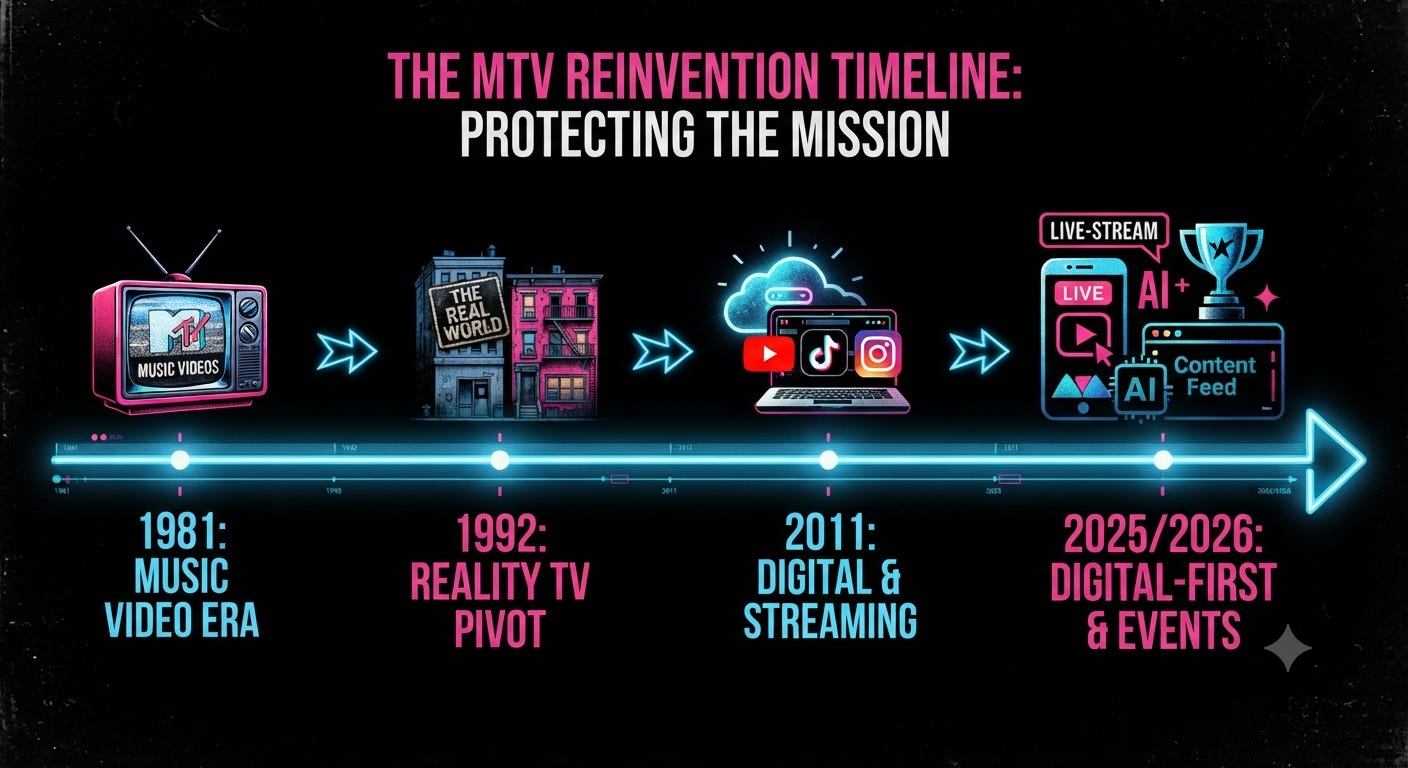
MTV launched in the United States in 1981, and the first video it ever aired was Video Killed the Radio Star by The Buggles. That title turned out to be more prophecy than punchline. Formats keep dying inside MTV. The brand keeps outliving them. Even as the music channels close, MTV continues through digital platforms and signature events like the VMAs and EMAs.
That distinction matters more than the nostalgia. MTV didn’t fail. A format failed. The company built around that format adjusted and kept going. I’ve unpacked why Gen X got this story wrong in more detail elsewhere, but the short version is this. Losing touch with a network for fifteen years and mistaking that for the network’s death are two different things.
MTV Was Selling Culture, Not Music
Here’s the thesis worth sitting with.
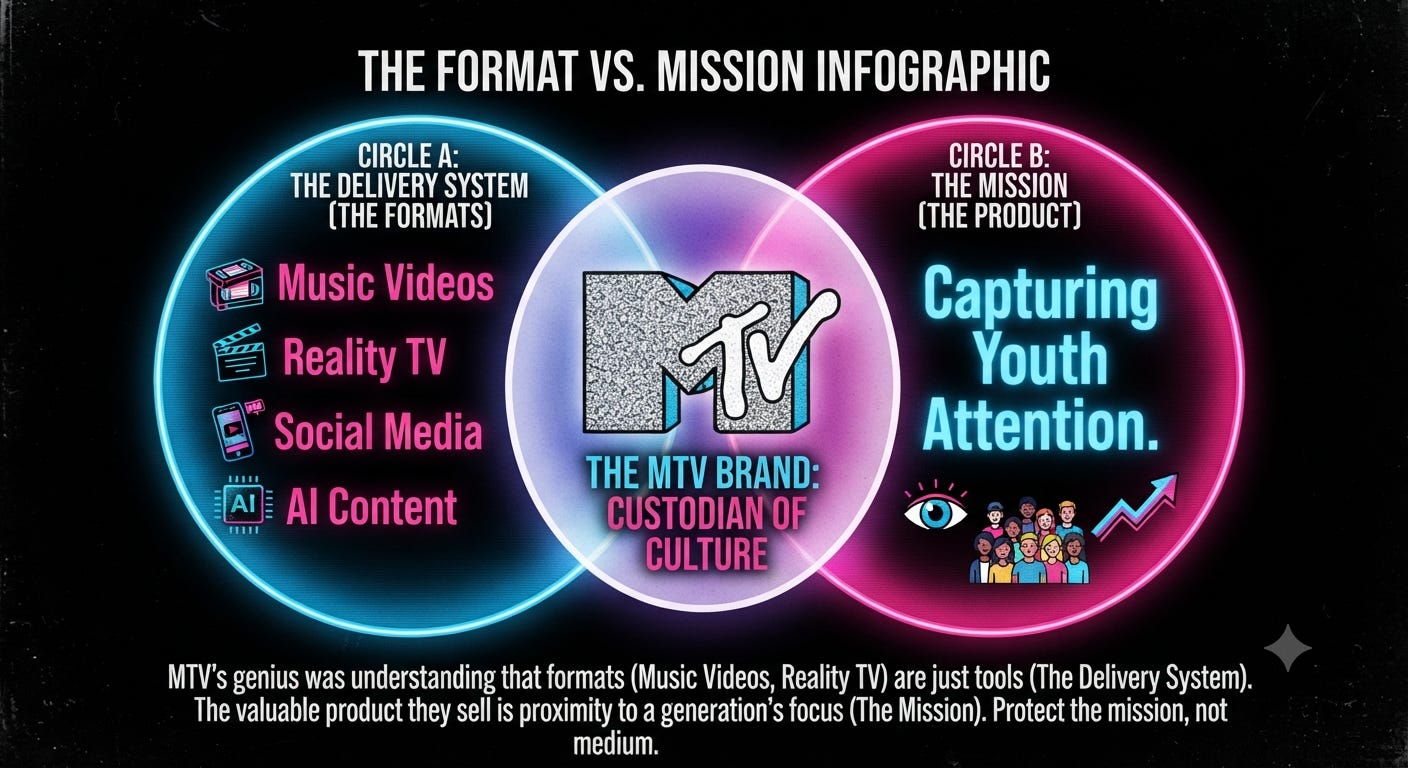
MTV was never built to play music videos. It was built to capture youth attention. Music videos were simply the first technology that accomplished that mission.
Once you see it this way, nothing about MTV’s history looks like decline. It looks like a company that understood its actual product long before most media brands figured out the difference between what they make and why anyone watches.
Music videos were the delivery system. Youth culture was what MTV was actually selling. Advertisers weren’t buying airtime next to songs. They were buying proximity to a generation’s attention. That’s a subtle distinction, and it’s the one every creator eventually has to make about their own work.
Why Reality TV Was a Logical Next Step
The Real World, MTV’s pioneering reality show, launched in the early 1990s, and at the time it read like a departure. A music channel making a show about strangers living in an apartment felt like a betrayal of the format.
It wasn’t a betrayal. It was the same mission wearing a different format.
The Real World still captured youth attention. It still shaped how young viewers saw identity, conflict, and culture. MTV didn’t abandon its audience when it added reality television. It followed that audience into a new format that did the job better than a music video could.
This is the move creators avoid because it feels like selling out. It rarely is. It’s usually just the mission finding a new vehicle.
When the Internet Took Over Music Discovery
MTV’s slide away from music didn’t start with the 2025 channel closures. It started years earlier, as streaming and social platforms became faster paths to new music than any television schedule could offer. MTV UK had already stopped airing music videos on its main channel back in 2011, shifting them to sister channels that are only now being switched off for good.
Media researcher Kirsty Fairclough, who studies popular culture at Manchester Metropolitan University, put it plainly. The conditions that once made MTV revolutionary simply don’t exist anymore, because platforms like YouTube and TikTok have completely reshaped how audiences engage with music and images.
That’s not an insult to MTV. It’s a description of what happens to every platform eventually. The internet didn’t kill MTV’s mission. It broke MTV’s monopoly on the tools that mission depended on.
The Day Everyone Became the VJ
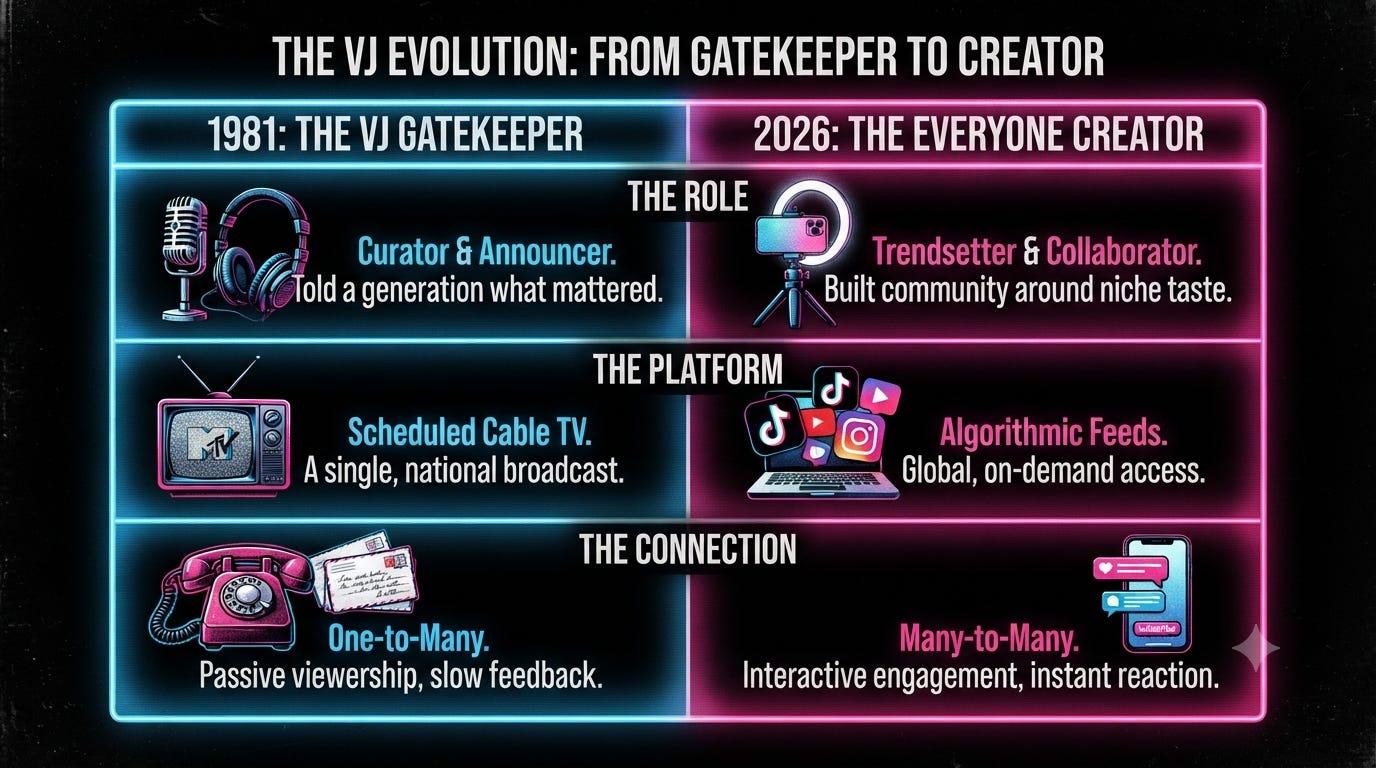
MTV’s video jockeys were once the gatekeepers of music discovery. They introduced the videos, set the tone, and told a generation what mattered this week.
That role didn’t disappear. It multiplied.
Every creator posting a reaction video, every podcaster breaking down a new release, every TikTok account building a following around music taste, they’re all doing what a VJ used to do. The context, the curation, the personality wrapped around the content. MTV invented that job. The internet just handed it to millions of people at once.
Compare the shift directly:
• VJs became TikTok creators
• Music videos became short-form video
• Celebrity interviews became Instagram
• Award shows became livestreams
• Trend discovery became algorithms
• Music discovery became YouTube
Social media didn’t replace MTV. It became MTV, at a scale no single network could ever reach.
The Lesson Every Creator Should Steal from MTV
This is where MTV’s story stops being media history and starts being a playbook.
Don’t confuse your platform with your purpose. MTV’s purpose was youth attention. Music videos were just the tool available in 1981. If you build your identity around a format instead of a mission, every platform shift will feel like an existential threat.
Follow attention, not tradition. MTV moved toward reality TV because that’s where its audience’s attention was heading, not because tradition demanded it. Creators who cling to “how things used to work” often watch newer platforms eat their audience.
Reinvention is easier before you’re forced to change. MTV had years of runway to shift toward reality programming before music videos became commercially unviable. Waiting until a format collapses under you leaves far fewer options.
Your audience cares about the value you create, not the format you use. Nobody tuned into The Real World because it replaced a Duran Duran video. They tuned in because it delivered the same thing music videos once did, a window into youth culture that felt current and alive.
AI Is Asking Creators the Same Question
Every creator right now is being asked a version of MTV’s question. AI tools are changing how content gets made, discovered, and consumed, the same way cable, then the internet, then social media each rewired the rules before.
The creators who panic are the ones who built their identity around a format, a newsletter cadence, a video style, a specific platform’s algorithm. The creators who adapt are the ones who know their actual mission well enough to carry it into a new tool.
MTV’s answer to disruption was never to protect the music video. It was to protect the relationship with youth culture, no matter what format that relationship required next. That’s the same choice AI is putting in front of every writer, podcaster, and brand builder today.
The Cool Test
Ask yourself:
Are you protecting your format, or your mission?
History suggests the people who survive technological change rarely cling to the medium. They keep finding new ways to deliver the same value.
FAQ
Why did MTV stop playing music videos?
Streaming, YouTube, and social media became faster ways for audiences to discover music, so MTV shifted its main channels toward reality television and broader entertainment to keep reaching youth audiences.
Did MTV fail as a television network?
No. A format failed. The MTV brand continues through digital platforms and events like the VMAs and EMAs even as its original music channels shut down.
What replaced MTV as the place to discover music?
YouTube, TikTok, and streaming platforms absorbed the music discovery role MTV once held exclusively.
How did The Real World change television?
The Real World, which premiered in the early 1990s, became a pioneering reality show that proved MTV’s audience wanted more than music videos, launching the modern reality TV format in the process.
Why was MTV so influential during the 1980s and 1990s?
MTV shaped fashion, launched careers, and defined youth culture at a moment when television had no real competition for young viewers’ attention.
Is MTV still relevant today?
The music channels are gone, but the brand persists through award shows, digital content, and cultural events, proof that a mission can outlive its original format.
What can creators learn from MTV’s reinvention?
Build around a mission, not a medium. Formats expire. The value you deliver to an audience doesn’t have to.
Did social media become the new MTV?
In many ways, yes. Creators now perform the curation and personality role VJs once held, just distributed across millions of individual channels instead of one network.
Thanks for Reading
Buy Me A Coffee |Gumroad| Medium
Gregory Bourne writes at the intersection of analog life , digital power, crafting frameworks for people who weren’t supposed to be part of the tech conversation. A published author and AI consultant, he helps Black solopreneurs and midlife founders build robust digital systems without compromising human judgment. Also, a pop culuture critic.
👉 Learn more and get the frameworks at feralgeneration.substack.com.