
When Intelligence Becomes Assistive: Rethinking Disability in the Age of AI
How AI is exposing the lie that "ability" was ever fixed - and why disabled entrepreneurs are designing the future everyone else will eventually need

The Almanac Forecast - Week of October 28, 2025
Forecast:
A dense fog of AI optimism lingers, although the early adopters have begun to cough. Visibility remains low; proceed with caution and a clear head.
Astronomical Note:
The moon wanes in the house of productivity - a reminder that not every bright object in the sky deserves your attention.
Proverb:
When everyone is reinventing the wheel, the wise sell roadmaps.
Agricultural Timing:
Ideal conditions for composting overblown ideas. Let them rot until the next true innovation breaks soil. Avoid planting new ventures while the hype barometer swings wildly.
Curiosity:
In 1961, IBM predicted that only a handful of computers would ever be needed worldwide. Humanity’s capacity for overestimating the new and underestimating the human remains perfectly balanced - like a seesaw powered by buzzwords.
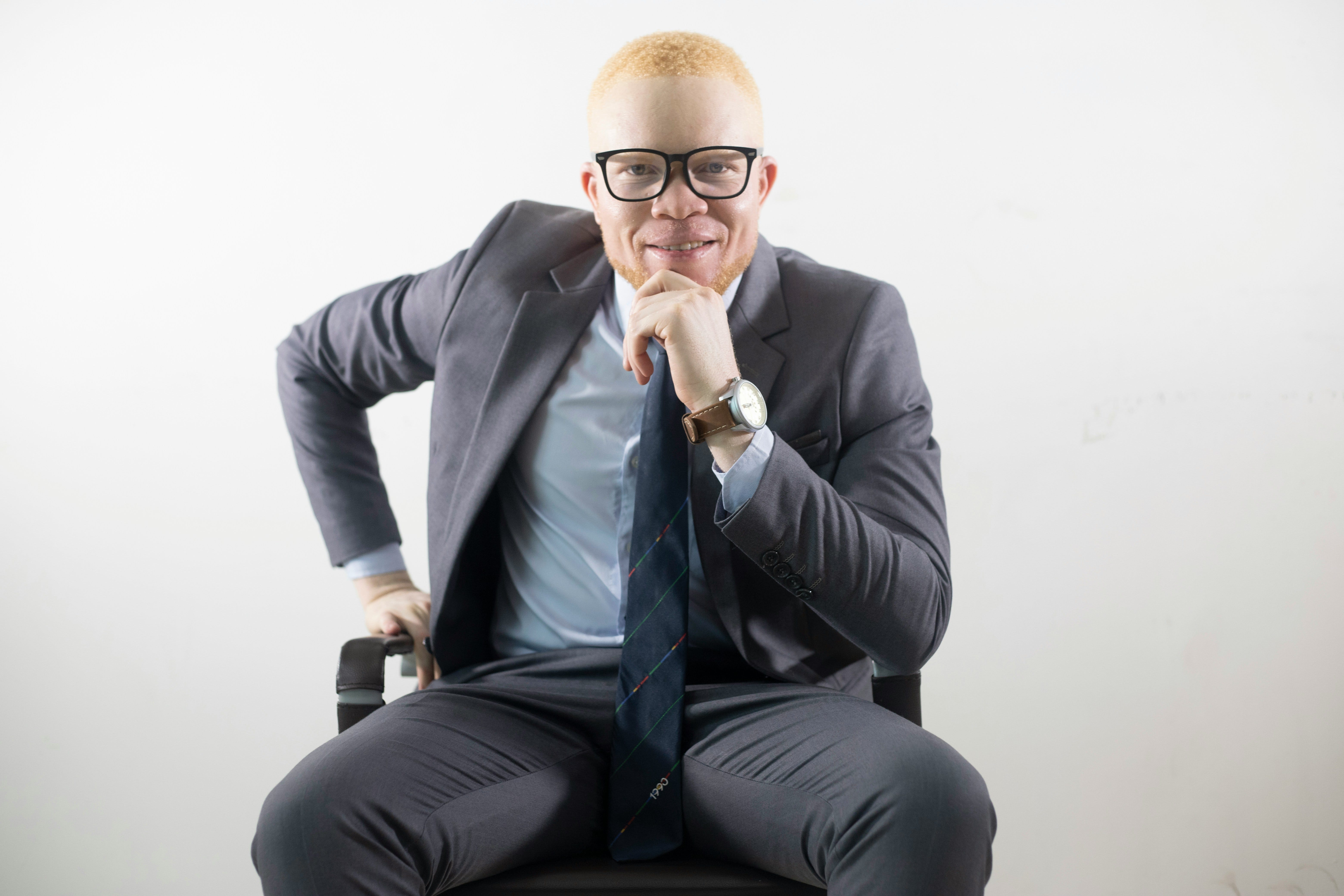
Photo by kelisa Bernard on Unsplash
There’s a scene in Get Out where Chris realizes the Sunken Place isn’t a metaphor. It’s infrastructure.
That’s the thing about systems designed to exclude you: they don’t announce themselves. They just make you feel like the problem is you.
For decades, that’s been the deal with disability and technology. Society called it “accommodation” — as if letting someone participate in the world they already lived in was a favor. As if the issue was broken bodies, not broken design.
AI didn’t fix that. But it did something more destabilizing: it made “normal” obsolete.
The Old Script: You’re the Bug, Not the System
The traditional narrative around disability was rehab dressed up as compassion. The goal wasn’t inclusion. It was assimilation.
Get close enough to “normal” and maybe you’d get a seat at the table. Prosthetics to mimic limbs. Screen readers to approximate sight. Speech synthesis so you could sound like everyone else.
The subtext was always the same: You’re welcome here once you stop reminding us you’re different.
Assistive technology was designed to paper over deviation. To make disability invisible. To let abled people pretend the world was fine as-is, and you just needed better tools to keep up.
But here’s where it gets interesting.
AI doesn’t care about normal. It barely understands it. And once intelligence itself becomes something you can rent by the month, the whole hierarchy starts looking ridiculous.
The Shift: When the Superpower Becomes the Commodity
If intelligence — the thing humans have used to justify every hierarchy ever built - can be automated, then what exactly are we measuring anymore?
Because that’s the quiet violence of AI. It doesn’t just “help” disabled entrepreneurs. It exposes how arbitrary the standards were in the first place.
A neurodivergent founder using Notion AI to externalize executive function isn’t “compensating for a deficit.” They’re operating at a different cognitive architecture. A blind podcaster using GPT-4 to generate content from voice prompts isn’t “overcoming limitations.” They’re building a workflow the rest of the world hasn’t caught up to yet.
This isn’t assistance. It’s integration.
AI becomes an extension of thought itself - a cognitive prosthetic that doesn’t ask you to perform an ability. It just amplifies what you already do.
The shift is philosophical, not just practical:
Dependence becomes design.
Accommodation becomes co-creation.
Disability becomes a prototype.
And once that clicks, the question stops being “Can you function like everyone else?” and becomes “Why was everyone else’s way treated as universal in the first place?”
The Uncomfortable Part: Normal Was Always Fiction
Here’s what makes people squirm: if AI can enhance memory, streamline communication, and simulate reasoning better than most humans, then “ability” was never a biological fact. It was a social agreement.
And agreements can be renegotiated.
This is the part where the abled world gets defensive. Because if intelligence is suddenly assistive — if the thing that justified meritocracy, hierarchies, and entire economies can be outsourced to an algorithm — then what were we even measuring?
The answer, historically, was proximity to an imagined default. White. Male. Neurotypical. Abled. The people who built the systems built them in their image and called it universal design.
AI shatters that illusion. Not because it’s morally enlightened, but because it’s amoral. It doesn’t care what your body does or doesn’t do. It processes input. It generates output. It expands capacity without asking you to prove you deserve it.
That’s liberating for disabled entrepreneurs who’ve spent their lives navigating gatekeepers.
But it’s also destabilizing. Because once “normal” collapses, so does the scaffolding holding up a lot of comfortable assumptions about who gets to lead, create, and thrive.
The Tension: Access Is Still a Weapon
Let’s not pretend this is a utopia.
AI could democratize capability. It could give disabled founders the autonomy they’ve been denied by every other system. But it could also deepen the same exclusions it claims to dissolve — just with better branding.
Because here’s the trap: if the best AI tools cost $200/month, and you’re already navigating medical debt and employment discrimination, “democratization” is just a press release. If voice recognition doesn’t understand non-standard speech patterns, you’re still locked out. If the training data encodes abled defaults, the AI just automates bias at scale.
The moral question isn’t “Will AI replace humans?”
It’s “Whose humanity gets extended — and who gets left behind?”
Right now, the answer is the same people it’s always been. The ones with resources. The ones whose needs were baked into the system from the start. The ones who get to call their preferences “universal.”
AI doesn’t solve that. It just makes the exclusion faster.
The Redefinition: Independence Was Never About Isolation
For disabled entrepreneurs, independence has never meant doing everything alone. It’s meant to control.
Control over how you work. When you rest. What you prioritize. Who you depend on and under what terms.
AI amplifies that control by removing friction — not just physical, but systemic. You can build, communicate, and scale without waiting for someone else’s permission. Without proving you’re “functional enough” to deserve resources. Without performing competence in ways that drain you dry.
But here’s the existential twist that makes this interesting: the line between self and system starts to blur.
When your thoughts are processed by language models. When your workflow depends on adaptive algorithms. When the tools that extend your capacity become so integrated, you can’t separate where you end and they begin.
Is that dystopia? Or just honesty?
Because the truth is, nobody’s ever been fully independent. Able people just had the privilege of pretending their dependencies were invisible. They leaned on infrastructure designed for them and called it “self-sufficiency.”
Disabled people never had that luxury. They’ve always known that autonomy is collaborative. That agency requires design. That independence isn’t about isolation — it’s about building systems that work with you, not against you.
AI just makes that visible for everyone.
The Payoff: Disability as Design Principle
Here’s the twist nobody saw coming: the people long defined by limitation are now leading the frontier of what comes next.
Disabled entrepreneurs aren’t “catching up” to some imagined standard. They’re building adaptive systems that the rest of the world will eventually depend on.
Because when intelligence becomes assistive, disability becomes prototype. The workarounds become blueprints. The accommodations become infrastructure. And the people dismissed as edge cases become the architects of a post-normal world.
That’s not charity. That’s strategy.
The future of “ability” won’t be measured by what your body or brain can do unaided. It’ll be measured by how intelligently you design your relationship with the tools that extend you.
Voice control. Automation. Adaptive workflows. Cognitive prosthetics. These aren’t accommodations anymore. They’re competitive advantages.
And the entrepreneurs who’ve spent their lives hacking accessibility? They’re not learning this framework. They invented it.
The Real Revolution: Everyone Else Is Just Catching Up
The accessibility revolution isn’t about making disabled people more like everyone else.
It’s about making everyone else aware of how fragile their definition of ability always was.
Because once AI makes intelligence assistive, the whole game changes. Suddenly, the people who’ve been building adaptive systems their entire lives aren’t outliers. They’re innovators.
The ones who’ve been told they’re “too slow” or “too difficult” or “not a good fit”? They’re the ones designing scalable, sustainable, human-centered workflows while everyone else is still pretending productivity means grinding yourself into dust.
AI didn’t create that gap. It just made it visible.
And now the question isn’t “Can disabled entrepreneurs keep up?”
It’s “Can the rest of the world keep up with them?”
That’s not science fiction. That’s entrepreneurship in the age of AI.
And if you’re not paying attention, you’re already behind.
Thanks for Reading
Buy Me A Coffee |Gumroad| Medium