
Why Is Gen X Called the Feral Generation?
The Real Origin of the Label


AI-generated image
Episode 05
Generation X is called the “feral generation” because many grew up with minimal supervision, high autonomy, and a latchkey childhood culture in the 1970s and 1980s. Economic shifts, rising divorce rates, and dual-income households meant children often managed themselves after school. The term reflects that early independence and the cultural contrast between Gen X upbringing and the highly supervised childhoods that followed.
That is the short answer.
The longer answer is about how independence becomes identity.
What Does “Feral” Mean in the Context of Generation X?
“Feral” in this context does not mean uncivilized. It means unsupervised and self-directed.
The label points to childhoods spent outside without constant adult oversight, solving problems alone, and navigating risk without a safety net. It compresses a broader generational experience into one provocative word.
The exaggeration is intentional. It dramatizes autonomy.
Freedom and neglect lived in the same house.
Where Did the Idea of “Feral Gen X” Come From?
The phrase gained momentum through online generational debates, especially on social media platforms where Millennials and Gen Z compared childhood experiences. Gen X adults described walking home alone, staying out until dark, heating their own dinners, and handling situations without calling a parent.
Younger audiences called it wild.
The label stuck because it captured a visible shift in parenting norms. It did not originate in academia. It spread through meme culture and commentary threads that turned lived experience into generational shorthand.
No formal movement. Just collective recognition.
What Is the Latchkey Generation?

AI-generated image
Generation X is often associated with the “latchkey generation,” referring to children who returned home from school to empty houses. Rising dual-income households and higher divorce rates in the 1970s and 1980s made this common.
Children learned to cook basic meals, manage time, and respond to minor emergencies alone.
Competence grows quickly when supervision is limited.
That early autonomy shaped how many Gen X adults approach work, authority, and risk. Self-reliance became the default.
Did Generation X Really Grow Up Without Supervision?
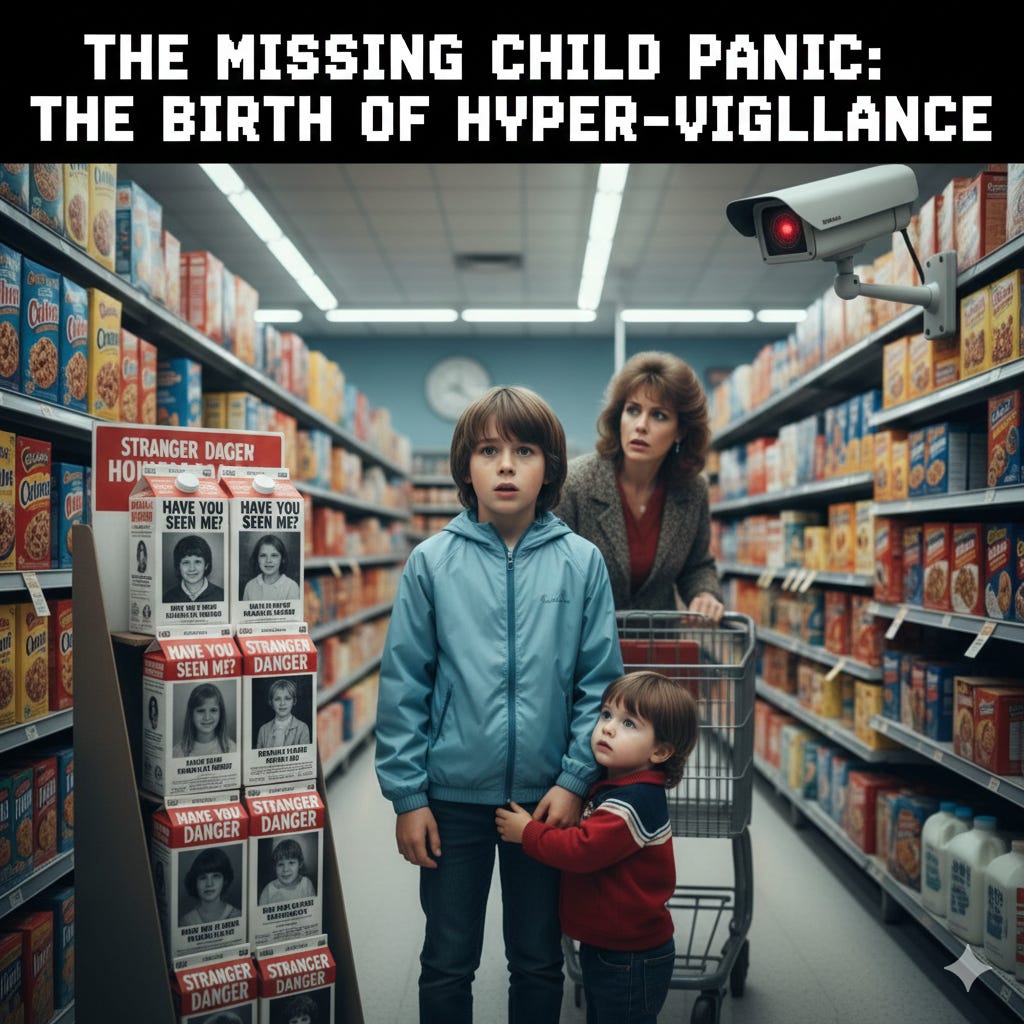
AI-generated image
Not universally.
Family structure, income level, and geography mattered. Some households were attentive and structured. Others were more hands-off.
However, compared to later generations, Gen X experienced significantly less daily oversight. There were no smartphones, no GPS tracking, no constant parental check-ins.
Childhood had more physical freedom and fewer digital guardrails.
That difference is measurable in parenting trends over time.
How Did Growing Up Unsupervised Shape Gen X Personality Traits?
Early independence tends to produce adaptability.
Many Gen X adults are known for workplace autonomy, skepticism toward institutions, and a preference for solving problems independently. When you grow up managing yourself, authority becomes optional rather than assumed.
This is not rebellion for style. It is a habit.
Institutional trust weakens when survival skills strengthen early.
That dynamic still shows up in career patterns, entrepreneurial tendencies, and cultural detachment.
Why Does the “Feral” Label Resonate Today?
The label resonates because it highlights contrast.
Modern parenting norms emphasize supervision, structured activities, digital monitoring, and safety optimization. Compared to that environment, Gen X childhood stories sound extreme.
Calling Gen X “feral” reframes what could be interpreted as neglect into resilience. It allows the generation to interpret risk-heavy upbringing as formative rather than harmful.
It also reflects nostalgia.
When uncertainty defines the present, stories of surviving without constant protection feel powerful.
Is Calling Gen X “Feral” an Insult or a Badge of Honor?
It depends on who is speaking.
Some use the term critically to point out gaps in supervision. Others use it proudly to emphasize toughness and independence.
The word functions as both a critique and a compliment.
That ambiguity is why it survives.
Is the “Feral Generation” Label Accurate or Exaggerated?
Both.
Not every Gen X child grew up unsupervised. The term simplifies complex economic and social realities into one headline-ready descriptor.
At the same time, parenting norms did shift dramatically between the 1970s and the 2000s. Oversight increased. Risk tolerance decreased. Childhood became more managed.
“Feral” captures that transition in one word.
It is cultural shorthand, not sociological precision.
Frequently Asked Questions About Feral Gen X
Frequently Asked Questions About the Feral Generation
Why is Generation X called the feral generation?
Because many grew up with minimal supervision and high independence during the 1970s and 1980s, creating a generational contrast with later, more supervised childhoods.
Who started calling Gen X feral?
The phrase emerged from online generational commentary rather than a single identifiable originator. It spread through social media and meme culture.
Was Gen X really unsupervised?
Many experienced significantly less daily oversight than Millennials or Gen Z, though experiences varied widely by family and region.
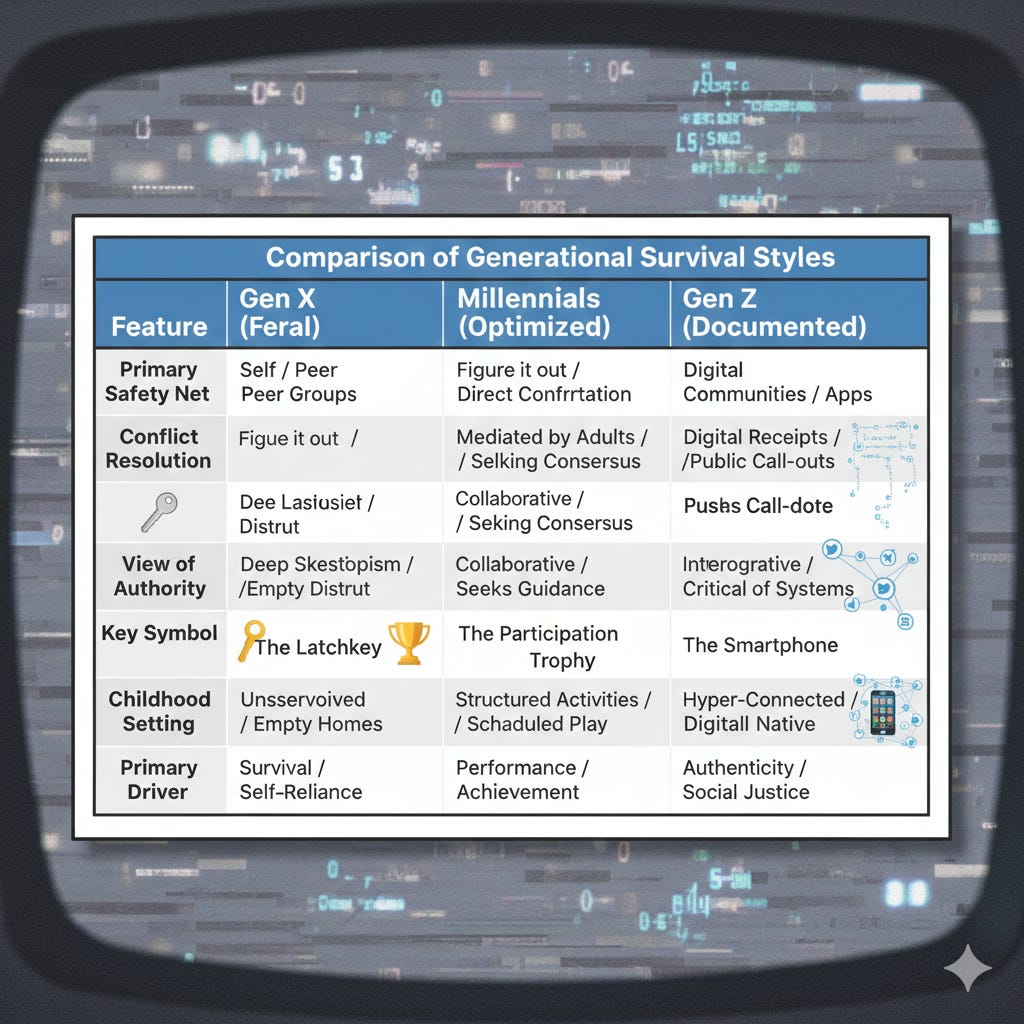
How is Gen X different from Millennials and Gen Z?
Gen X childhoods were generally less structured and less digitally monitored. Later generations grew up with higher parental involvement and technological supervision.
AI-generated image
Is Being “Feral” a Competitive Advantage in Today’s Economy?
In a stable system, supervision looks like protection.
In an unstable one, self-direction looks like leverage.
The same traits that defined Gen X childhood, autonomy, risk tolerance, and emotional self-regulation, now map cleanly onto a volatile economic landscape. Careers are less linear. Institutions feel less reliable. Technology shifts faster than corporate loyalty.
If you learned early that no one was coming to manage your day, pivoting does not feel traumatic. It feels familiar.
Gen X adults entered a workforce that promised stability and watched that promise erode through layoffs, recessions, corporate restructuring, and digital disruption. Adaptability stopped being optional.
It became muscle memory.
The “feral” label, stripped of its meme exaggeration, describes people comfortable operating without constant guidance. Comfortable learning on their own. Comfortable navigating uncertainty without waiting for instruction.
In an economy defined by rapid change, that is not a flaw.
It is an advantage.
What once looked like neglect can function as training.
And what once sounded like an insult increasingly reads like preparation.
Thanks for Listening
Buy Me A Coffee |Gumroad| Medium